Could you outline your experience with the advocates of Liberation Theology in South America?
As Secretary of the National Evangelical Council of Peru I read all the news releases of the Information Service of the WCC and took note of the development of its revolutionary theology. I also kept myself informed of the activities of the Student Christian Movement, Church and Society, and the Committee for Evangelical Laity in Latin America. By 1966 it was abundantly clear that these bodies were decidedly leftist in tendency and their ideology fundamentally different from what the National Evangelical Council represented. I therefore kept a file of all this information and at the Annual Assembly of the Council in January 1966 presented a report on the Communistic infiltration in the Evangelical movement of Latin America. This caused quite a stir and met with a hostile reception from the Methodists. However with the single contrary vote of this body it was decided to pursue the matter further and appoint a committee to investigate the charges. At the following Assembly these were amply sustained and the situation found to have grown worse in the meantime.
At the same assembly in 1967 the council was invited to send a delegate to take part in the arrangements for the Third Latin American Evangelical Conference. I was unanimously elected to represent Peru at this meeting, which was held in Sao Paulo, Brazil. The Chairman was Emilio Castro, coordinator of the Committee for Evangelical Unity. He outlined the programme, which was to be focused on social action, his slogan being “Doctrine divides, Social Action unites”. I immediately challenged this and was amply supported by the Chileans and Brazilians. When it became evident that the representative bodies of these countries were not prepared to follow the WCC line, the Committee for Unity did nothing but hinder plans for a genuinely evangelical conference. The final upshot was the Castro’s committee held a relatively small conference in Buenos Aires while the Conference on Evangelism held in Bogata later the same year drew three times as many delegates. It is alleged that the Bogata conference was the result of North American engineering. In part this is true but it was the result of a definite appeal from Latin America. As for the WCC engineered conference in Buenos Aires, the WCC butted in without any invitation from Latin America and gratuitously thrust itself upon the evangelical movement through the intermediary of the Committee for Evangelical Unity which it had itself spawned. It was through the National Evangelical Council of Peru that the National Association of Evangelicals was appealed to and I personally carried the request to the States.
I should add that in the mid 60’s Peru was subjected to guerrilla attacks under the leadership of Che Guevara and with the tacit approval of “Church and Society”. Much bloodshed and damage resulted till the movement was eventually put down by the armed forces. As for the Indians on whose behalf the invasion was launched, they failed to rally around the banner of their pretended “liberator”.
Showing posts with label National Evangelical Council of Peru. Show all posts
Showing posts with label National Evangelical Council of Peru. Show all posts
Saturday, June 14, 2008


Thursday, April 10, 2008
Extract from Memoirs
I went to South America in 1927 and left in 1968, so that my period of service extended over 41 years.
I went to Peru as a teacher in the Anglo Peruvian College in Lima, a boys college, which functions under the auspices of the Free Church of Scotland and is one of the most prestigious colleges in Peru. I was a full-time teacher there for 12 years and a part time teacher till my retirement in 1968. From 1934 onwards I was a lecturer in the Peruvian Bible Institute and became General Secretary to the National Evangelical Council of Peru upon the formation of this body in 1940 and continued to serve in this capacity till my retirement. I also founded a Bible Institute for the Lowland Indians of Peruvian Amazonia in 1957. This now functions under the auspices of the Swiss Indian Mission. I took part in the founding of the Lima Evangelical Seminary in 1962. I was Vice Rector and taught Church History and Systematic Theology. In 1968 I was decorated by the Peruvian Government and made a Knight Commander of the Order of Magisterial Palms for Distinguished services to education. Although always based in Lima I traveled extensively both in Peru and the rest of the Continent. Memoirs (Interview)
I went to Peru as a teacher in the Anglo Peruvian College in Lima, a boys college, which functions under the auspices of the Free Church of Scotland and is one of the most prestigious colleges in Peru. I was a full-time teacher there for 12 years and a part time teacher till my retirement in 1968. From 1934 onwards I was a lecturer in the Peruvian Bible Institute and became General Secretary to the National Evangelical Council of Peru upon the formation of this body in 1940 and continued to serve in this capacity till my retirement. I also founded a Bible Institute for the Lowland Indians of Peruvian Amazonia in 1957. This now functions under the auspices of the Swiss Indian Mission. I took part in the founding of the Lima Evangelical Seminary in 1962. I was Vice Rector and taught Church History and Systematic Theology. In 1968 I was decorated by the Peruvian Government and made a Knight Commander of the Order of Magisterial Palms for Distinguished services to education. Although always based in Lima I traveled extensively both in Peru and the rest of the Continent. Memoirs (Interview)
Saturday, March 29, 2008
Biography
Extract from the 1966 New Zealand Encyclopedia.
PERU
Money, Herbert
(1899– ).
Field director of the New Zealand Fellowship of Peruvian Bible Schools.
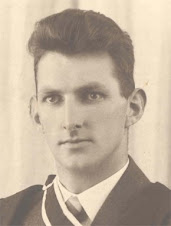
Herbert Money was born at Hughenden, Queensland, on 29 November 1899. He was educated at Christchurch Technical College and graduated M.A. from Canterbury Univ. College. He holds diplomas in education and social science and, in 1931, gained his Ph.D. in philosophy from San Marcos, Peru.
Money taught at Christchurch Technical College from 1923 to 1927 and at the Anglo-Peruvian College at Lima from 1927 to 1940. Since 1934 he has been lecturer at the Peruvian Bible Institute and, from 1940, has been secretary of the National Evangelical Council of Peru. In 1948 he became field director of the New Zealand Fellowship of Peruvian Bible Schools. He founded the first Bible Institute for Jungle Indians. Dr Money has written Procedimentos Parlamentarios — Peruvian Laws of Special Interest to the Evangelical Community.
PERU
Money, Herbert
(1899– ).
Field director of the New Zealand Fellowship of Peruvian Bible Schools.
Herbert Money was born at Hughenden, Queensland, on 29 November 1899. He was educated at Christchurch Technical College and graduated M.A. from Canterbury Univ. College. He holds diplomas in education and social science and, in 1931, gained his Ph.D. in philosophy from San Marcos, Peru.
Money taught at Christchurch Technical College from 1923 to 1927 and at the Anglo-Peruvian College at Lima from 1927 to 1940. Since 1934 he has been lecturer at the Peruvian Bible Institute and, from 1940, has been secretary of the National Evangelical Council of Peru. In 1948 he became field director of the New Zealand Fellowship of Peruvian Bible Schools. He founded the first Bible Institute for Jungle Indians. Dr Money has written Procedimentos Parlamentarios — Peruvian Laws of Special Interest to the Evangelical Community.
Subscribe to:
Posts (Atom)

 Posts
Posts


